






 The merciless earthquake of December 7, 1988 turned the part of Northern Armenia into mere ruins, taking lives of over 25,000 people. Massive damages were caused to the second largest city of Armenia Gyumri. The earthquake, however, seems went beyond the old Gyumri. “What was before it that stayed, what was after it that went”, like to repeat the residents. And really, the subterranean shocks were unable to destroy and ruin the firm buildings constructed by the Gyumri masters. Those, fortunately, endure as a testimonial of the city’s relic of the past as well as a credential of its people soul honesty.
Gyumri has an old history. It was yet mentioned in the travel notes of a Greek philosopher and poet Xenophanes (570-480 B.C.). The first historical data about Kumairi settling were mentioned by historiographer Ghevond (VIII century A.D.) In the course of centuries the name Kumairi has been transformed into Gyumri. The city itself has also altered. The economic busyness commences particularly after the Russian-Persian (1826-1828) and Russian-Turkish (1828-1829) wars, when thousands of Armenians emigrate here from Erzurum, Bayazet, Mush and Kars. They choose to settle with their families here, in the locality, situated on the left bank of Akhurian river, starting building new houses and improving it. On the occasion of the Black citadel construction completion, the Russian tsar Nikolai I arrives in Gyumri, and, in honor of his wife Alexandra, renames it Alexandrapol. The latter is declared a town in 1840 undergoing to new and structured outlay and construction. It is not secretive that Alexandrapol was mainly a town of artisans, where a number of flourishing crafts exceeded a hundred. The most advanced crafts were ironwork, jewellery, leather processing and so on.
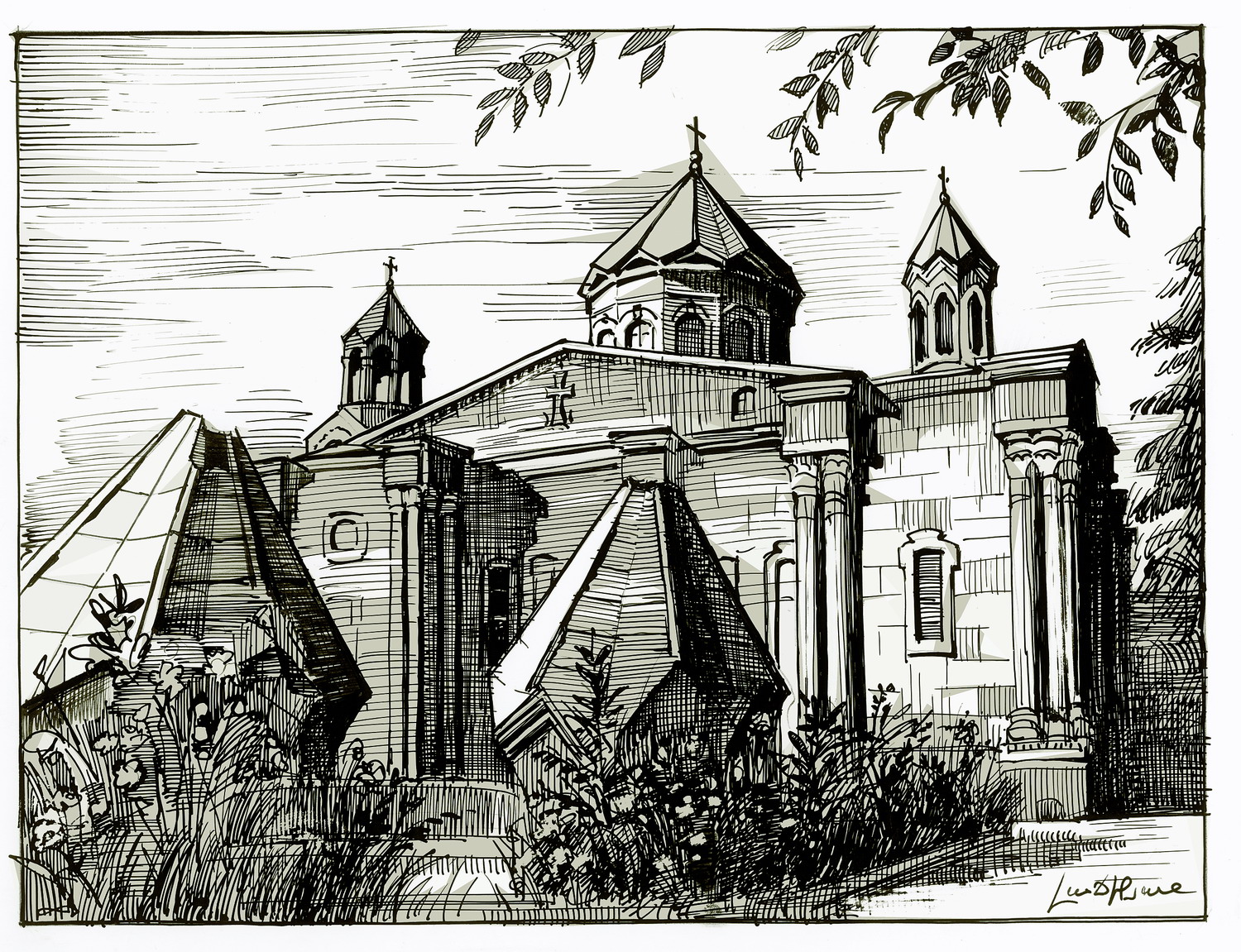
The national architecture of Gyumri is unique and attractive. Even today we still relish the buildings multi-layered cornices, iron-forged gates, wood shutters of the windows. The intriguing is that the beauty canons were applied not only for museums and public buildings but also for plain dwellings. Today, 22 years later, Gyumri got its second breath. It is true, that several thousand people still live in metal containers, but a lot of new and beautiful buildings have appeared on the city map. And it is important that again they maintain the old, traditional style of Gyumri.
